Home / Curriculum
Our Approach
Our programme seeks to give children a genuine sense of belonging to an environment that has been intentionally developed by a competent team.
We follow a holistic approach to learning built on respect, responsibility, and community. Our environment is nurturing, stimulating, and guided by each child’s interests — encouraging curiosity, independence, and real-world exploration. Through a child-centred, self-guided curriculum, we help children express themselves and build meaningful relationships.
We introduce early foundations in maths, science, and languages (Arabic and English) through hands-on, enjoyable activities that build confidence and essential skills. By working closely with parents, we ensure every child receives the support they need to grow and thrive.
3 months - 1 year
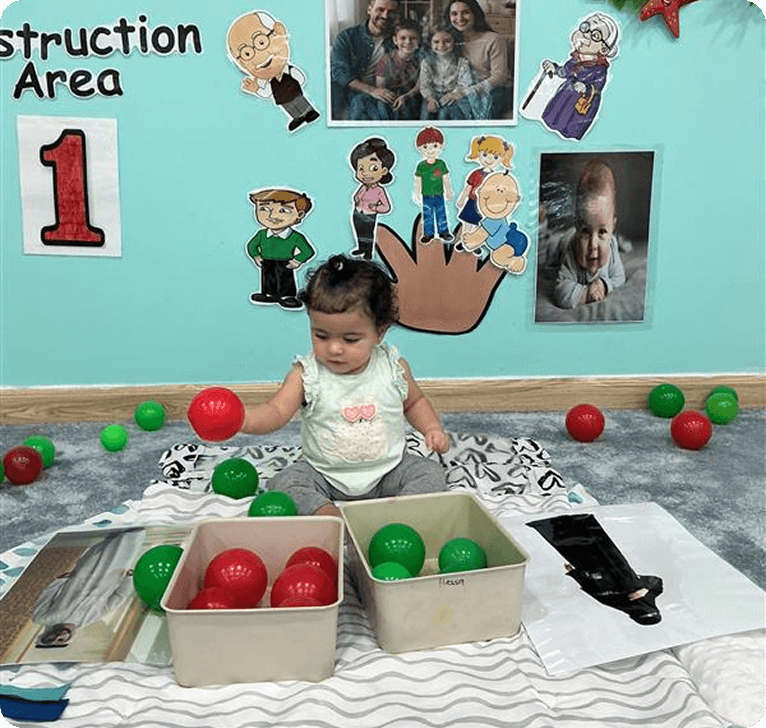
For babies aged 3 months to 1 year, our curriculum provides a safe, nurturing environment where they begin to develop basic self-help and independence skills. At this stage, children learn to explore their surroundings, reach for and grasp objects, and start feeding themselves with support. They build early communication through babbling, gestures, and facial expressions, while forming strong attachments with caregivers. Through sensory experiences, movement, songs, and play, babies develop physical coordination, curiosity, and an awareness of the world around them. Our approach ensures each child feels secure, supported, and encouraged to discover and grow at their own pace.
Our daily routine for babies aged 3 months to 1 year is thoughtfully designed to support their growth, comfort, and well-being. The day includes flexible feed times and sleep/rest periods to meet the individual needs of each baby. Activities are gentle and varied, balancing sensory play, movement, and quiet moments for relaxation.
For babies aged 3 months to 1 year, our curriculum provides a safe, nurturing environment where they begin to develop basic self-help and independence skills. At this stage, children learn to explore their surroundings, reach for and grasp objects, and start feeding themselves with support. They build early communication through babbling, gestures, and facial expressions, while forming strong attachments with caregivers. Through sensory experiences, movement, songs, and play, babies develop physical coordination, curiosity, and an awareness of the world around them. Our approach ensures each child feels secure, supported, and encouraged to discover and grow at their own pace.
Our daily routine for babies aged 3 months to 1 year is thoughtfully designed to support their growth, comfort, and well-being. The day includes flexible feed times and sleep/rest periods to meet the individual needs of each baby. Activities are gentle and varied, balancing sensory play, movement, and quiet moments for relaxation.
1 - 2 Years
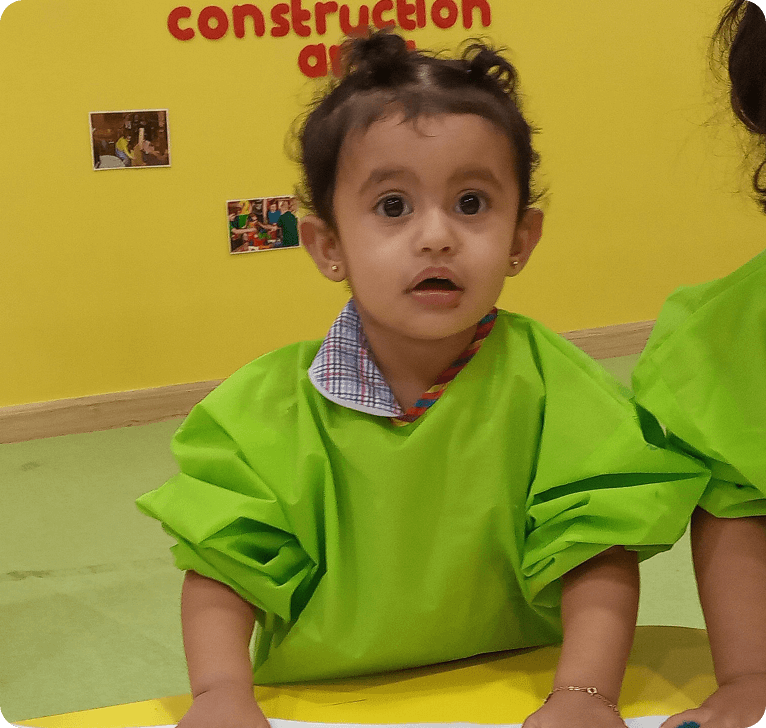
Our EYFS curriculum for children aged 1–2 years focuses on nurturing early independence and confidence through exploration and play. At this stage, children begin developing early self-help skills such as feeding themselves with support, learning to drink from a cup, washing hands, and starting to manage personal belongings. They explore language through gestures, sounds, and simple words, while gradually learning to interact with others. Through sensory activities, movement, songs, and imaginative play, children develop physical coordination, curiosity, and an understanding of their surroundings. Our environment encourages them to feel safe, supported, and confident to try new experiences at their own pace.
Our daily routine for children aged 1–2 years from 8:00 am to 2:30 pm is thoughtfully structured to support their learning, health, and overall well-being. The day includes three meals—breakfast, lunch, and a snack—along with a dedicated sleep/rest period. Activities alternate between active and calm times, giving our little ones opportunities for physical play, sensory exploration, early learning, and quiet relaxation in a safe and nurturing environment.
Our EYFS curriculum for children aged 1–2 years focuses on nurturing early independence and confidence through exploration and play. At this stage, children begin developing early self-help skills such as feeding themselves with support, learning to drink from a cup, washing hands, and starting to manage personal belongings. They explore language through gestures, sounds, and simple words, while gradually learning to interact with others. Through sensory activities, movement, songs, and imaginative play, children develop physical coordination, curiosity, and an understanding of their surroundings. Our environment encourages them to feel safe, supported, and confident to try new experiences at their own pace.
Our daily routine for children aged 1–2 years from 8:00 am to 2:30 pm is thoughtfully structured to support their learning, health, and overall well-being. The day includes three meals—breakfast, lunch, and a snack—along with a dedicated sleep/rest period. Activities alternate between active and calm times, giving our little ones opportunities for physical play, sensory exploration, early learning, and quiet relaxation in a safe and nurturing environment.
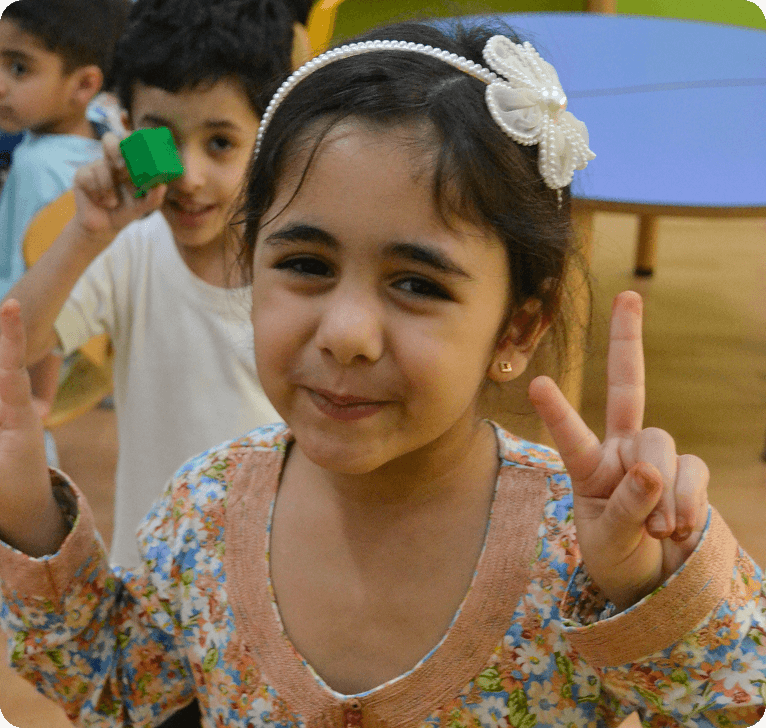
At 2–3 years, children are eager to explore and do more things for themselves. Our curriculum supports this growing independence by helping them develop self-help skills such as feeding themselves, washing hands and tidying up. They build communication skills through words, gestures, and simple sentences, and develop early social skills like sharing and playing alongside others. Through sensory play, movement, music, stories, and hands-on exploration, children strengthen their physical abilities, curiosity, and understanding of the world. Our nurturing environment encourages confidence, curiosity, and a love for learning.
Our daily routine for children aged 2–3 years from 8:00 am to 2:30 pm is carefully structured to support their learning, independence, and overall well-being. The day includes two meals—breakfast and lunch—along with a dedicated rest period. Activities are balanced between active play, creative exploration, and quiet learning, giving children opportunities to develop physical skills, curiosity, social interactions, and self-help abilities in a safe and nurturing environment.
At 2–3 years, children are eager to explore and do more things for themselves. Our curriculum supports this growing independence by helping them develop self-help skills such as feeding themselves, washing hands and tidying up. They build communication skills through words, gestures, and simple sentences, and develop early social skills like sharing and playing alongside others. Through sensory play, movement, music, stories, and hands-on exploration, children strengthen their physical abilities, curiosity, and understanding of the world. Our nurturing environment encourages confidence, curiosity, and a love for learning.
Our daily routine for children aged 2–3 years from 8:00 am to 2:30 pm is carefully structured to support their learning, independence, and overall well-being. The day includes two meals—breakfast and lunch—along with a dedicated rest period. Activities are balanced between active play, creative exploration, and quiet learning, giving children opportunities to develop physical skills, curiosity, social interactions, and self-help abilities in a safe and nurturing environment.
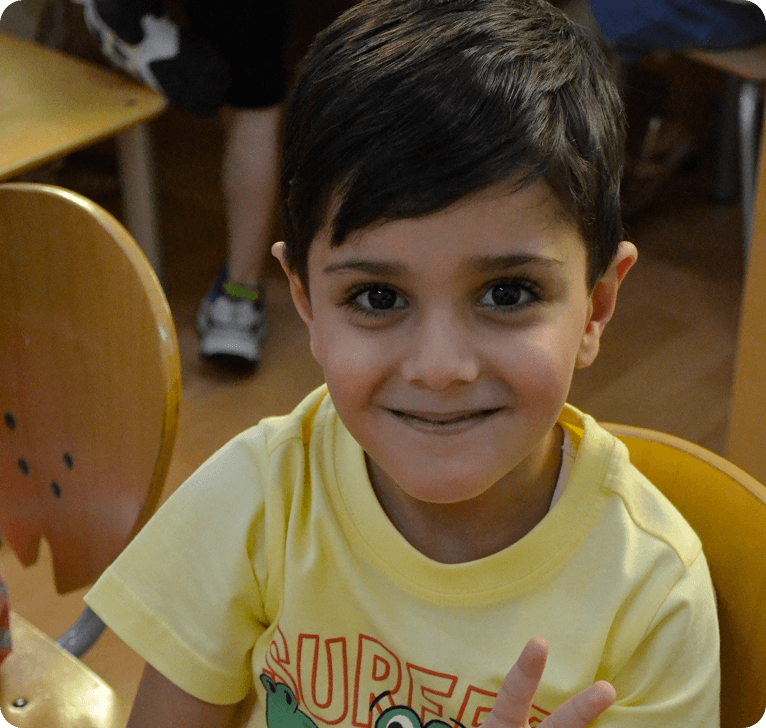
Our EYFS curriculum for children aged 3–4 years supports their growing independence and confidence. At this stage, children learn to communicate clearly, build positive relationships, and manage their emotions. A strong focus is placed on developing self-help skills such as dressing, feeding themselves, using the toilet independently, and taking responsibility for their belongings. Through active play, they strengthen physical skills, explore early literacy and numeracy, discover the world around them, and express creativity through art, music, and imaginative play. Every learning experience is designed to nurture independence, curiosity, and a love for learning.
Our daily routine for children aged 3–4 years from 8:00 am to 2:30 pm is designed to support their learning, independence, and overall well-being. The day includes two meals—breakfast and lunch. Activities are carefully balanced between active play, creative exploration, and focused learning, giving children opportunities to develop physical skills, curiosity, social interactions, and self-help abilities in a safe and nurturing environment.
Our EYFS curriculum for children aged 3–4 years supports their growing independence and confidence. At this stage, children learn to communicate clearly, build positive relationships, and manage their emotions. A strong focus is placed on developing self-help skills such as dressing, feeding themselves, using the toilet independently, and taking responsibility for their belongings. Through active play, they strengthen physical skills, explore early literacy and numeracy, discover the world around them, and express creativity through art, music, and imaginative play. Every learning experience is designed to nurture independence, curiosity, and a love for learning.
Our daily routine for children aged 3–4 years from 8:00 am to 2:30 pm is designed to support their learning, independence, and overall well-being. The day includes two meals—breakfast and lunch. Activities are carefully balanced between active play, creative exploration, and focused learning, giving children opportunities to develop physical skills, curiosity, social interactions, and self-help abilities in a safe and nurturing environment.
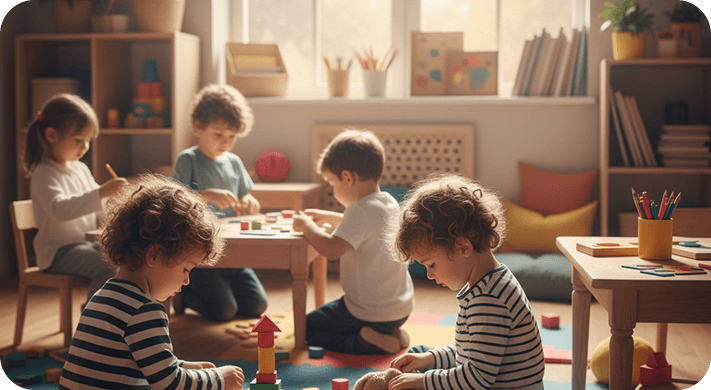
Our Tailored Early Learning Experiences
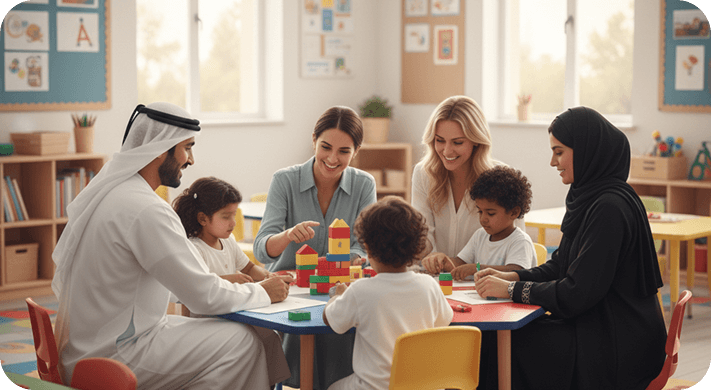
Teacher assistants play a crucial role in supporting teachers by contributing to the overall success of the classroom by providing additional support and helping with day-to-day tasks to ensure every child receives the attention they need.
Our curriculum focuses on key specific areas that help children build a strong foundation for future learning. Through Literacy and Mathematics, children develop essential reading, writing, and problem-solving skills.
Our teachers carefully observe each child to understand their learning style, strengths, and areas where extra support may be needed.
If additional insight is required, our SENCO conducts a detailed assessment to identify specific support needs.
When necessary, we consult external specialists to gain a deeper understanding and recommendations.
We work collaboratively with teachers, SENCO, specialists, and parents to build a tailored support plan.
With parental approval, we implement a customised support program that includes targeted interventions and resources to help each child thrive.
Book A Tour With Us